
Vacuum Casting China for Prototype and Low-Volume Plastic Parts
Vacuum Casting China for Functional Prototypes and Low-Volume Production
ABC Rapid provides vacuum casting China services for product developers, OEMs, engineers, and purchasing teams that need functional plastic parts before injection molding is justified. Vacuum casting, also called urethane casting or silicone molding, uses a silicone mold and liquid polyurethane resin to produce small batches of parts that reproduce the geometry, texture, and appearance of a master pattern.
This process is suitable for prototype validation, appearance models, engineering samples, and bridge production where customers need more consistent parts than one-off 3D printing, but do not yet require permanent metal tooling. ABC Rapid evaluates part geometry, material expectations, surface requirements, quantity, and critical features before confirming the manufacturing route.
- Suitable for prototype and low-volume plastic part requirements
- Silicone molds can reproduce fine surface textures, engraved details, and master-pattern geometry
- Polyurethane resin options can be reviewed for rigid, flexible, transparent, colored, or rubber-like part requirements
- Appropriate for functional checks, appearance review, assembly testing, and pre-production evaluation
- Supports manufacturing review before tooling and casting begin
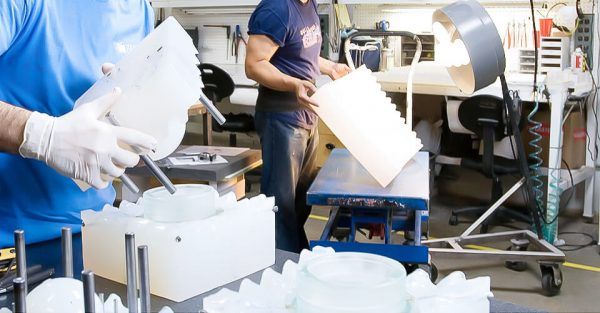
Why Vacuum Casting Works for Prototype and Bridge Production Projects
Lower Tooling Commitment Before Injection Molding
Injection molding requires durable metal tooling and is generally more appropriate when production volume, design stability, and material selection are already confirmed. Vacuum casting uses silicone tooling, which is faster to prepare and better suited to early-stage product development, pilot builds, and lower-volume demand.
For projects that need multiple parts for testing, customer review, assembly verification, or market samples, a vacuum casting factory can provide a practical intermediate route between individual prototypes and full production tooling.
Surface Detail Is Transferred from the Master Pattern
The finished casting reflects the quality of the master pattern. CNC-machined or SLA-printed master patterns are commonly used to create the silicone mold. Surface texture, paint-ready surfaces, logos, engraved marks, and cosmetic details should therefore be reviewed before the mold is made.
Parting-line location, gates, vents, undercuts, and cosmetic surfaces should also be considered during the manufacturing review. These decisions affect demolding, mold life, surface appearance, and the amount of post-processing required.
Material Selection Should Match the Validation Objective
Vacuum casting materials are generally polyurethane-based resins formulated to simulate common production plastics or elastomeric materials. The material selection should be based on the purpose of the parts, such as fit checking, stiffness evaluation, display samples, handling tests, or short-run functional use.
- Rigid polyurethane for housings, covers, brackets, and enclosure components
- ABS-like or PC-like resin options for parts requiring a tougher or more engineering-oriented feel
- PP-like resin options for applications requiring relative flexibility or living-hinge evaluation, subject to geometry review
- Rubber-like polyurethane for soft-touch, sealing, grip, and flexible component prototypes
- Transparent or tinted resin options for visual components, subject to resin availability and cosmetic requirements
How the Vacuum Casting Process Is Planned and Manufactured
Master Pattern Preparation
The process begins with a master pattern produced from the approved CAD model. Depending on project requirements, the master may be CNC machined or created by SLA 3D printing. ABC Rapid reviews the master-pattern method based on part size, feature detail, surface requirements, and target quantity.
Silicone Mold Making
The master pattern is positioned in a mold box and encapsulated in silicone. After curing, the silicone mold is carefully opened along a planned split line. Gates and vent channels are incorporated to support resin flow and reduce the risk of trapped air in detailed or thin-wall areas.
Vacuum Casting and Curing
Selected polyurethane resin is mixed and poured into the silicone mold under controlled vacuum conditions. The vacuum process helps reduce air entrapment and supports the reproduction of fine details. After curing, the casting is removed, gates and flash are trimmed, and the part receives the specified finishing treatment where required.
Post-Processing and Quality Review
Post-processing can include trimming, sanding, painting, color matching, texture treatment, assembly preparation, or basic dimensional review. Inspection requirements should be identified before production, especially when the project includes critical dimensions, mating features, threaded inserts, cosmetic standards, or documentation needs.
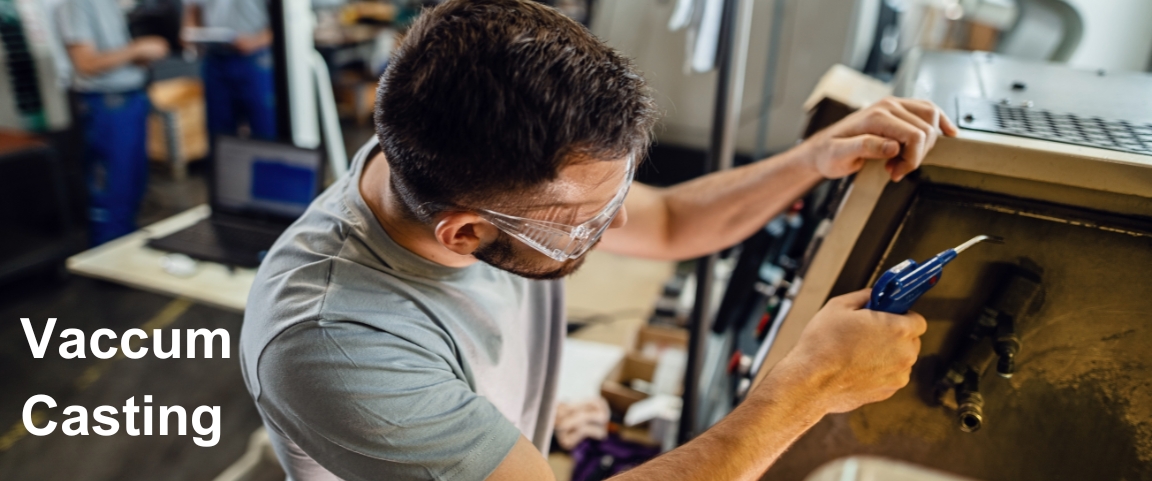
Vacuum Casting Factory Capabilities and Process Specifications
The following information provides general planning guidance for vacuum casting projects. Final feasibility, tolerance, mold quantity, material suitability, and lead time should be confirmed after ABC Rapid reviews the drawings, 3D model, and project requirements.
| Capability Item | Typical Planning Range | Project Considerations |
|---|---|---|
| Manufacturing process | Silicone mold vacuum casting | Also referred to as urethane casting or polyurethane casting |
| Typical production quantity | 10 to 50 parts | Higher quantities may require multiple silicone molds or an alternative process review |
| Silicone mold output | Approximately 15 to 20 parts per mold | Actual mold life depends on geometry, resin type, undercuts, demolding stress, and finish requirements |
| Typical dimensional tolerance | Approximately ±0.3 mm for smaller dimensions or percentage-based tolerance for larger parts | Critical dimensions, mating surfaces, and tight-tolerance features require individual review |
| Recommended wall thickness | Usually 1.0 mm or above | Uniform walls are preferred; thinner areas, deep ribs, and sharp transitions should be evaluated |
| Surface options | As-cast, matte, gloss, painted, textured, tinted, or clear-like appearance | Cosmetic requirements should be specified before master-pattern preparation |
| Color options | Natural resin color, pigmented color, or painted finish | Color matching and appearance standards may require sample approval |
| Typical lead time | Often around 7 to 15 working days after design and material confirmation | Lead time depends on part size, mold count, finish requirements, quantity, and production scheduling |
| Quality documentation | Basic inspection support available upon request | Dimensional reports, first article requirements, and special documentation should be confirmed before quotation |
Engineering Support for Custom Vacuum Cast Parts and Silicone Molds
ABC Rapid supports custom vacuum cast parts based on customer CAD files, drawings, samples, and project specifications. Because silicone molds are flexible rather than rigid metal tools, part geometry and critical dimensions should be reviewed before production to identify features that may affect casting quality or mold durability.
Design and DFM Review Scope
- Parting-line and gate-position planning for cosmetic and functional surfaces
- Undercut assessment and split-mold feasibility review
- Wall-thickness consistency review to reduce shrinkage, sink marks, or warpage risk
- Rib, boss, hole, thread, and assembly-feature evaluation
- Critical-dimension identification for fit and assembly requirements
- Master-pattern method selection based on required appearance and feature accuracy
- Material selection discussion based on hardness, rigidity, transparency, color, and intended use
Custom Manufacturing Options
ABC Rapid can evaluate project-specific requirements that are common in prototype and low-volume programs. Some options can be incorporated during normal mold and casting preparation, while others may require additional process evaluation, sample approval, or secondary operations.
- Custom colors, painted finishes, and cosmetic texture requirements
- Engraved logos, raised text, and identification marks, subject to feature-size review
- Threaded inserts or assembly features, subject to geometry and installation-method review
- Prototype assemblies and multi-part set production
- Part labeling, packaging requirements, and delivery grouping by assembly or revision
- Dimensional inspection requirements for identified critical features
- Material and finish comparison samples when project conditions allow
What to Confirm Before Starting
A vacuum casting company can provide a more accurate feasibility assessment when the project includes enough engineering and procurement information. The most important details are the target quantity, intended use of the parts, material behavior required, appearance standard, critical features, and target delivery date.
- 3D CAD file in STEP, IGES, X_T, or another usable neutral format
- 2D drawing when dimensions, tolerances, threads, or inspection points are critical
- Target material behavior, such as rigid, flexible, transparent, heat-resistant, or rubber-like
- Color standard, texture, paint, gloss, or cosmetic acceptance requirement
- Required quantity for prototypes, testing, pilot production, or customer samples
- Assembly interfaces, inserts, fasteners, and mating-part information
- Required inspection documents, packaging instructions, and requested delivery schedule
Applications for Vacuum Casting in China Across Development Programs
Vacuum casting is most effective when customers need several functional or presentation-quality plastic parts without committing to injection molding tooling. It is commonly selected for projects where geometry has been substantially validated, but product teams still need physical parts for testing, feedback, or limited deployment.
Product Development and Industrial Design
Product development teams use vacuum casting for appearance models, user-evaluation samples, product demonstrations, and design verification. The process can provide a more molded appearance than many one-off prototype methods, particularly when the master pattern and finishing requirements are carefully controlled.
Electronics Enclosures and Consumer Product Components
Vacuum cast housings, covers, bezels, grips, and internal plastic components can support fit checks, assembly trials, and early marketing samples. Color, texture, logos, and cosmetic surfaces should be included in the project brief because these details influence master-pattern preparation and finishing work.
Automotive and Equipment Prototype Programs
Automotive suppliers, equipment manufacturers, and engineering teams may use vacuum casting for interior trim samples, dashboard components, protective covers, brackets, ducts, handles, and non-load-bearing prototype parts. Material performance should be reviewed against the actual environment when parts will be exposed to heat, chemicals, repeated loading, or outdoor conditions.
Medical Device and Laboratory Equipment Development
For non-implantable prototype components, vacuum casting can support early enclosure, handle, fixture, and instrument-housing development. If a project requires specific regulatory documentation, biocompatibility evidence, sterilization compatibility, or controlled material traceability, these requirements must be confirmed before material selection and quotation.
Typical Project Example for a Vacuum Casting Factory
Typical Project Example
An industrial equipment manufacturer required a short run of plastic control-enclosure components for an engineering validation program. The parts included an outer housing, removable cover, internal mounting features, and visible exterior surfaces intended for customer evaluation.
Buyer Requirement: The project required parts that could be assembled with existing hardware, represented the intended product appearance, and supported functional fit checks before the customer committed to injection mold tooling. The buyer also needed a consistent finish across several parts and requested review of critical mounting and fastening features.
Solution: ABC Rapid reviewed the supplied 3D model and drawing notes, identified the cosmetic surfaces, and assessed wall transitions, internal ribs, screw-boss geometry, and mold split direction. A silicone mold vacuum casting route was selected. The project scope included resin selection based on the intended rigidity, trimming of casting gates, and post-processing for the requested appearance level.
Result: The customer received a low-volume set of parts suitable for enclosure assembly, design review, and further tooling decisions. The vacuum casting route allowed the project team to evaluate fit and appearance before moving to a higher-volume manufacturing process.
FAQ About Vacuum Casting China Services and Factory Capabilities
What is vacuum casting?
Vacuum casting is a low-volume manufacturing process that uses silicone molds and liquid polyurethane resin to produce prototype and bridge-production parts. It is also commonly called urethane casting or polyurethane casting.
What quantity is suitable for vacuum casting?
Vacuum casting is commonly considered for quantities of about 10 to 50 parts. The suitable quantity depends on part complexity, mold output, required material, appearance level, and whether additional silicone molds are needed.
How many parts can one silicone mold produce?
A silicone mold often produces approximately 15 to 20 castings. Actual mold life varies according to resin type, part geometry, undercuts, wall thickness, demolding stress, surface finish requirements, and handling during production.
What materials are available from a vacuum casting company?
Vacuum casting commonly uses polyurethane-based materials that can simulate rigid plastics, flexible materials, rubber-like elastomers, transparent-like materials, and selected engineering plastic characteristics. Material availability and performance requirements should be reviewed before quotation.
Can vacuum cast parts include color and surface texture?
Yes. Parts can be produced with pigmented resin, paint, matte or gloss finishes, and selected textures. The master-pattern quality and stated cosmetic standard are important because the silicone mold reproduces visible details from the master.
What tolerance can a vacuum casting factory achieve?
A common planning guideline is approximately ±0.3 mm for smaller dimensions, while larger parts may use a percentage-based tolerance. Tight tolerances, sealing features, threads, mating surfaces, and critical dimensions should be reviewed individually because silicone molds and resin shrinkage affect repeatability.
Is vacuum casting suitable for production parts?
Vacuum casting is generally best for prototypes, engineering samples, market validation, pilot runs, and low-volume bridge production. For stable, higher-volume demand, injection molding or another production process may be more appropriate after tooling and volume requirements are confirmed.
What files are needed for a vacuum casting quotation?
A 3D CAD file is preferred for manufacturing review. A 2D drawing should be provided when the project includes critical dimensions, tolerances, threads, assembly interfaces, inspection requirements, or specific surface-finish notes.
About ABC Rapid Vacuum Casting Manufacturing
ABC Rapid manufactures customized prototype and low-volume parts for customers that require rapid prototyping, CNC machining, vacuum casting, and 3D printing support. For vacuum casting projects, ABC Rapid reviews part geometry, material expectations, surface requirements, target quantity, and critical features before confirming a silicone-mold production plan.
ABC Rapid supports project communication from drawing review through prototype manufacturing and delivery preparation. Quality requirements, inspection requests, packaging expectations, and manufacturing constraints should be defined early so the selected process matches the intended application and procurement schedule.
Request a Vacuum Casting Manufacturing Review
For an accurate vacuum casting quotation and manufacturability review, please provide the available project information with the inquiry. A 3D file and drawing notes allow ABC Rapid to assess mold feasibility, material selection, critical features, and the most suitable production plan.
- 3D CAD model and 2D drawing, if available
- Required quantity and expected future production volume
- Material behavior required, including rigidity, flexibility, transparency, color, or hardness
- Surface finish, texture, paint, logo, and cosmetic requirements
- Critical dimensions, tolerances, threads, inserts, or mating features
- Application environment and functional testing requirements
- Inspection reports, packaging instructions, and target delivery schedule
If samples, special documentation, DFM feedback, or material comparison are required, please include these needs with the project information so they can be evaluated during the manufacturing review.
Products Library
 Small vacuum cast plastic component with two circular openings
 Two-piece vacuum cast enclosure with internal mounting posts
 Vacuum cast control panel enclosure with circular and rectangular cutouts
 Vacuum cast plastic housing with circular opening and mounting holes


