What is a lathe?
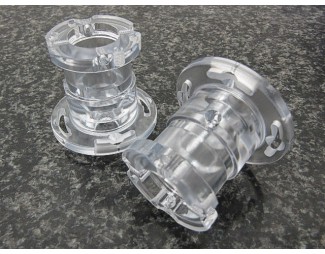
A lathe is one of the most important types of cutting machines in metal-cutting machinery. It is the most common type in general machine manufacturing factories and is also known as the "mother machine" of work. It is a machine used for turning rotating workpieces, capable of performing operations such as cutting, grinding, embossing, drilling, deformation, end face, and turning, and applying tools to the workpiece to create objects symmetrical around the rotating axis. The history of the lathe is long. It has evolved from a simple device that relied on human power or foot pedals to make the workpiece rotate and held the cutting tool by hand for cutting, to a modern efficient equipment driven by an electric motor and equipped with a complex speed-changing mechanism.
II. What are the characteristics of turning processing?
Turning processing, as a type of cutting processing method, has distinct features. Firstly, it is a processing method that achieves the desired shape by rotating the material while keeping the cutting tool relatively stationary or moving along a specific path. Unlike milling processing, in turning processing, the material being processed rotates on the spindle, while the cutting tool moves along a predetermined direction to remove excess material. This processing method can produce extremely high dimensional accuracy because the material is uniformly cut during rotation, ensuring the consistency of the surface.
Car processing allows for adjustment of the rotational speed and rotation method to meet different processing requirements; at the same time, due to the availability of various types of cutting tools, complex-shaped products can be manufactured by combining different processing techniques. For example, outer diameter processing is used to beautify the surface or achieve initial shaping; inner diameter processing is for adjusting the hole diameter and improving the internal surface quality; thread cutting processing can generate precise pitch; and cutting processing can divide the material into the required length.
It is worth noting that car processing is not limited to simple cylindrical processing. It can also process polygons or other non-circular cross-sections by changing the relative motion trajectory between the tool and the workpiece. Even on a broaching lathe, similar principles can be utilized to perform "broaching" on certain multi-tooth tools (such as forming milling cutters).
III. Application Scope and Limitations of Turning
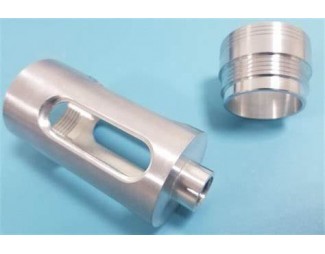
Turning is widely used in the field of mechanical manufacturing and is applicable to the cutting processing of various sizes of rotating surfaces and helical surfaces. It can handle internal and external cylindrical surfaces, end faces, conical surfaces, formed surfaces, and threads, and can also perform accessory processes such as drilling, reaming, tapping, threading, and embossing. It is particularly suitable for applications that require high precision and good surface finish, such as the processing of key components in automotive parts, such as engine parts and transmission shafts.
If you have any prototype project in hand, please feel free to contact: enquiry@abcrapid.com.
Search
Recent Post


Other New Articles